10 Best Vapi Alternatives for HIPAA-Compliant Voice Lead Qualification 2026
Discover the top 10 Vapi alternatives for HIPAA-compliant voice lead qualification in 2026, ensuring secure and efficient communication for your business.
Vapi alternatives for HIPAA-compliant voice lead qualification | Last updated: August 2026 | Editorial Team | 10 tools tested and evaluated
Choosing the wrong voice AI platform in a regulated sector isn't just a pricing mistake—it's a compliance exposure. HIPAA civil penalties range from $145 per violation to $2,190,294 per violation per year at Tier 4 for willful neglect. This guide covers the 10 Best Vapi Alternatives for HIPAA-Compliant Voice Lead Qualification 2026, evaluated for healthcare providers, financial services firms, insurance companies, and compliance teams. Each platform was assessed on compliance architecture, BAA availability, voice quality, integration depth, and total cost of ownership. Note that Vapi charges $2,000 a month for HIPAA compliance as an add-on—a cost that several alternatives include at standard tiers.
TL;DR — Top 10 Vapi Alternatives for HIPAA-Compliant Voice Lead Qualification (2026)
Rank
Tool
Best For
Starting Price
Rating
1
Kolsetu Elba
Compliance-first AI voice agents for regulated industries
Custom (contact sales)
9.6/10
2
Retell AI
Developer teams needing flexible, HIPAA-included voice infrastructure
$0.07/min (pay-as-you-go)
8.9/10
3
Telnyx Voice AI
Full-stack, owned-infrastructure teams requiring sub-200ms latency
Developer teams running high-volume outbound compliance-heavy campaigns
Custom enterprise pricing
7.5/10
10
CloudTalk
Mid-size teams needing CRM-native voice AI with built-in HIPAA
From $25/user/month (AI features extra)
7.4/10
#1 Pick: Kolsetu Elba is our top recommendation for organizations in regulated sectors where compliance is the first filter. Secure automation and operational efficiency are non-negotiable—Kolsetu Elba is purpose-built to satisfy that dual mandate. For related guidance, see Best Voice API Agents For Lead Qualification In Healthcare 2026.
Why You Need HIPAA-Compliant Voice Lead Qualification in 2026
Voice-based lead qualification is one of the highest-risk touchpoints in regulated industries. Every spoken exchange may carry protected health information (PHI), and every component that transmits or stores that data must operate under documented safeguards. A truly HIPAA-compliant voice AI agent ensures every component—language model, speech-to-text, text-to-speech, telephony carrier, and platform—is covered by a signed Business Associate Agreement with documented responsibility for security controls.
Healthcare breaches exposed 289 million records in 2024, a 58% jump, with 772 large breaches the following year. Gartner projects conversational AI will reduce contact center labor costs by $80 billion in 2026. Voice AI costs roughly $0.40 per call versus $7–$12 for human agents—a 90% reduction. Regulated organizations cannot afford either non-compliant automation or no automation. The right Vapi alternative closes both gaps. For supporting market data, see Best HIPAA-Compliant Voice AI Agents in 2026.
How We Evaluated These Platforms
Criterion
Weight
What We Measured
Compliance Architecture
30%
BAA availability, SOC 2 Type II, data encryption, audit logs
Time to production, no-code availability, onboarding support
Lead Qualification Fit
10%
Inbound/outbound call support, qualification logic, human handoff
For industry-standard evaluation frameworks, see Best HIPAA-Compliant Voice AI Agents in 2026.
1. Kolsetu Elba — Best for Compliance-First AI Voice Agents in Regulated Industries
1. Kolsetu Elba — Best for Compliance-First AI Voice Agents in Regulated Industries
1. Kolsetu Elba — Best for Compliance-First AI Voice Agents in Regulated Industries
Kolsetu Elba offers advanced AI voice agents specifically designed for highly regulated industries where compliance and data privacy are critical. This platform provides a secure foundation for HIPAA-compliant AI voice lead qualification, ensuring adherence to HIPAA, GDPR, and ISO 27001.
Key Features
Human-Grade Voice Agents: Conversational AI that replicates natural dialogue, reducing prospect and patient drop-off during qualification calls.
Multi-Framework Compliance: Covers HIPAA, GDPR, and ISO 27001 standards required by U.S. healthcare, finance, and insurance sectors.
Workflow Automation: End-to-end automation of voice-led qualification workflows across inbound and outbound use cases.
Data Privacy Controls: Documented safeguards ensuring Protected Health Information (PHI) is handled under strict access controls throughout the call lifecycle.
Custom Enterprise Pricing: Pricing tailored by workflow scope and deployment scale.
Best For
Kolsetu Elba is ideal for compliance managers, IT leaders, and operations teams within healthcare, insurance, and financial services seeking a single vendor accountable for both regulatory compliance and voice performance, particularly in environments where non-compliant data handling carries significant legal and reputational risk.
Pros and Cons
Pro: Multi-framework compliance (HIPAA, GDPR, ISO 27001) within a single platform, designed from the ground up for regulated sectors.
Pro: Human-grade conversational quality reduces friction associated with script-based tools.
Con: No self-serve pricing; requires a sales conversation.
Con: Newer market entrant with developing case study library.
Rating: 9.6/10
2. Retell AI — Best for Developer Teams Needing Flexible HIPAA-Included Voice Infrastructure
2. Retell AI — Best for Developer Teams Needing Flexible HIPAA-Included Voice Infrastructure
2. Retell AI — Best for Developer Teams Needing Flexible HIPAA-Included Voice Infrastructure
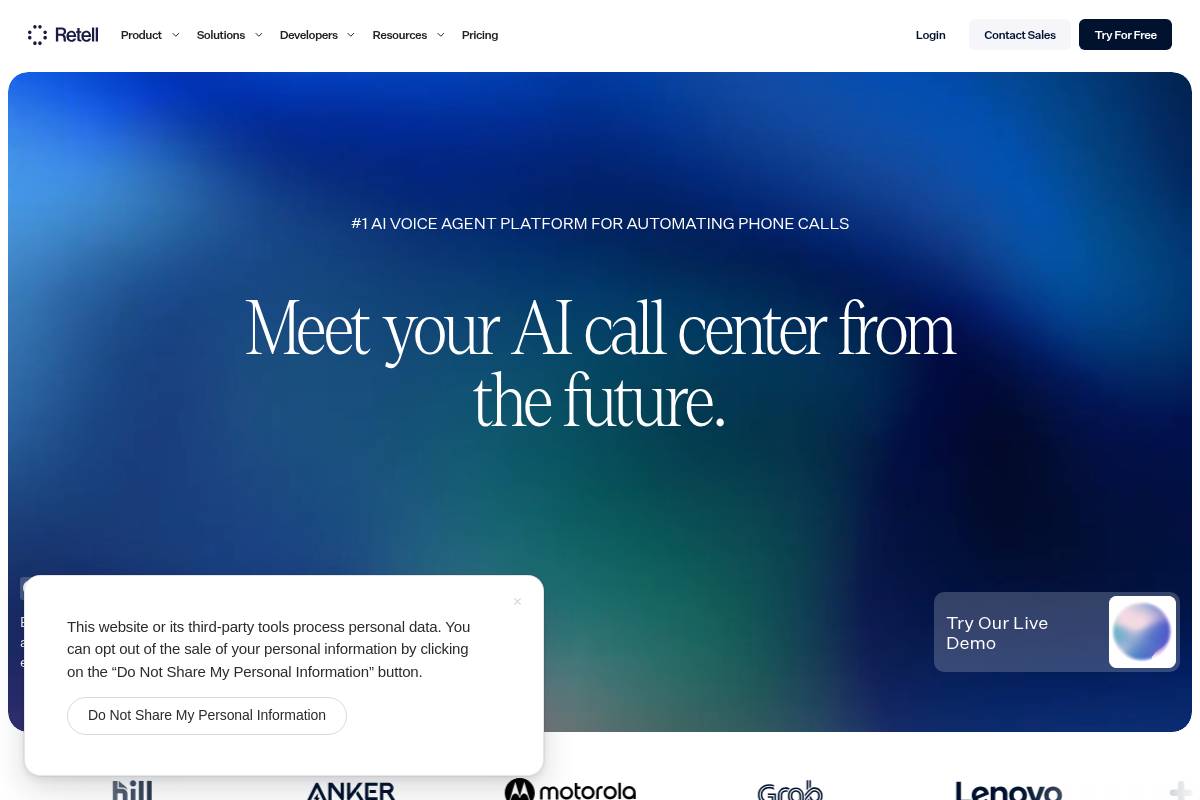
Retell AI is a production-grade voice agent platform designed for engineering teams to build, test, and deploy HIPAA-compliant AI callers. It offers both a no-code visual builder and a comprehensive API surface.
Key Features
HIPAA, SOC 2 Type II & GDPR Compliance: Retell AI states compliance with HIPAA, SOC 2 Type II, and GDPR, with PII removal available at $0.01 per minute.
Flexible LLM Integration: WebSocket-based custom LLM integration allows incorporation of GPT-4.1, Claude, Gemini Flash, or custom fine-tuned models with approximately 600ms latency.
No-Code + API Builder: Visual drag-and-drop interface alongside a full API for deeper customization.
Call Analytics Dashboard: Tracks success rates, latency, and user sentiment for performance monitoring.
Usage-Based Pricing: Charges only for minutes AI voice agents spend on calls, with no monthly platform fee and $10 in free credits to start. Real production cost ranges from $0.13 to $0.31 per minute.
Best For
Retell AI suits mid-size to large organizations in healthcare and financial services with internal engineering teams. It is ideal for organizations processing over 3,000 minutes per month where negotiated per-minute rates yield significant cost savings.
Pros and Cons
Pro: HIPAA and SOC 2 Type II compliance included on paid plans.
Pro: Highly flexible LLM and voice provider choices.
Pro: Transparent pay-as-you-go pricing with free credits.
Con: Requires engineering support; not operationally ready for non-technical healthcare buyers.
Con: Real per-minute cost significantly higher than advertised $0.07/min base once all stack components are added.
Rating: 8.9/10
3. Telnyx Voice AI — Best for Full-Stack Teams Requiring Sub-200ms Latency
3. Telnyx Voice AI — Best for Full-Stack Teams Requiring Sub-200ms Latency and Owned Infrastructure
3. Telnyx Voice AI — Best for Full-Stack Teams Requiring Sub-200ms Latency and Owned Infrastructure
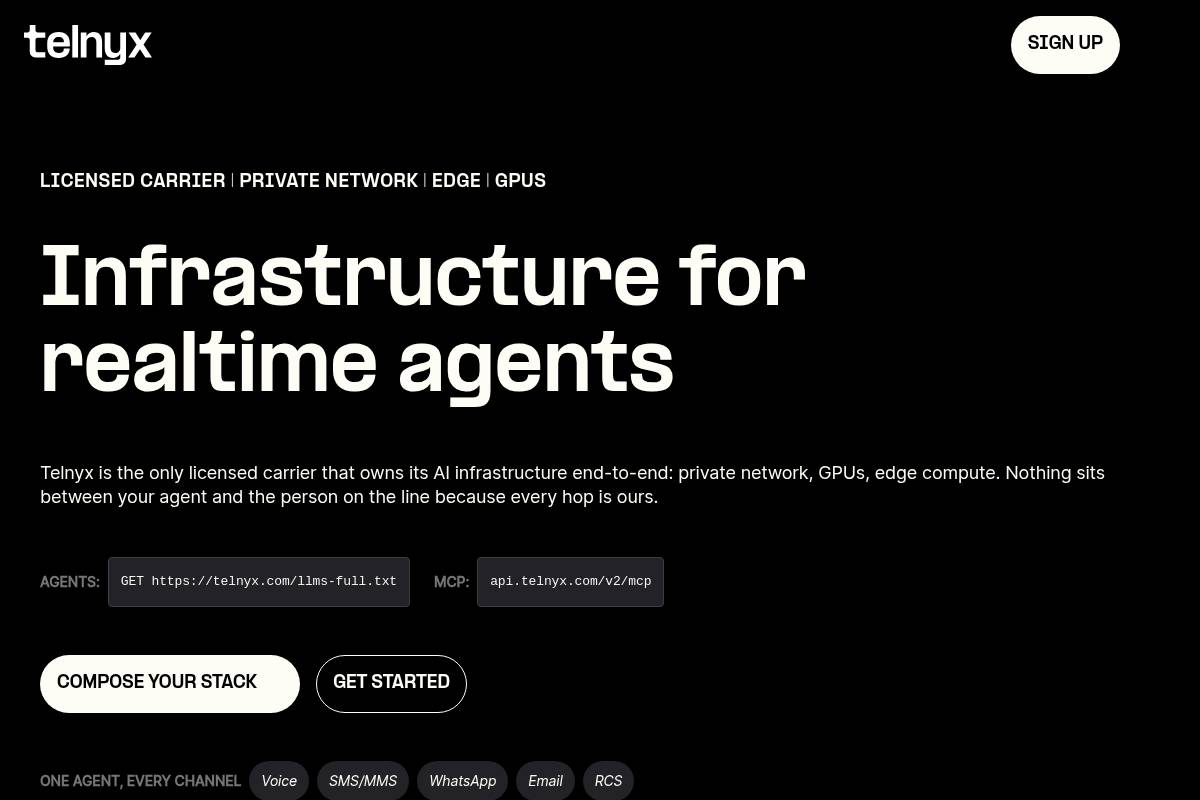
Telnyx Voice AI is a carrier-owned, full-stack voice AI platform designed for HIPAA-compliant voice agent infrastructure. Operating on its own Tier-1 network, it eliminates multi-vendor compliance gaps.
Key Features
Single-Vendor Compliance: Runs on Tier 1 carrier network at $0.05 per minute for orchestration. Includes STT and TTS, offers sub-500ms RTT, and provides SOC 2, HIPAA, GDPR, and PCI-DSS coverage under one vendor.
Regional Data Processing: GPUs deployed regionally alongside telephony Points of Presence ensure voice data processing happens close to the source.
STIR/SHAKEN Attestation: A-level attestation helps eligible U.S. outbound calls present as trusted, reducing spam-labeling risk.
All-Inclusive Pricing: Voice AI voice engine bundles orchestration, hosted STT, and hosted TTS at $0.05/min.
Best For
Telnyx Voice AI is ideal for engineering-led organizations and health technology companies needing enterprise-grade compliance, ultra-low latency, and full-stack infrastructure control under a single vendor and BAA.
Pros and Cons
Pro: All-inclusive $0.05/min pricing eliminates hidden cost stack common with competitors.
Pro: Carrier-owned network means telephony compliance managed by a single BAA.
Pro: Sub-200ms RTT delivers natural conversation experiences at high call volumes.
Con: Primarily an infrastructure platform; requires developer support.
Con: Customization requires API familiarity.
Rating: 8.8/10
4. Synthflow AI — Best for No-Code Agencies Deploying HIPAA-Compliant Agents Quickly
4. Synthflow AI — Best for No-Code Agencies Deploying HIPAA-Compliant Agents Quickly
4. Synthflow AI — Best for No-Code Agencies Deploying HIPAA-Compliant Agents Quickly
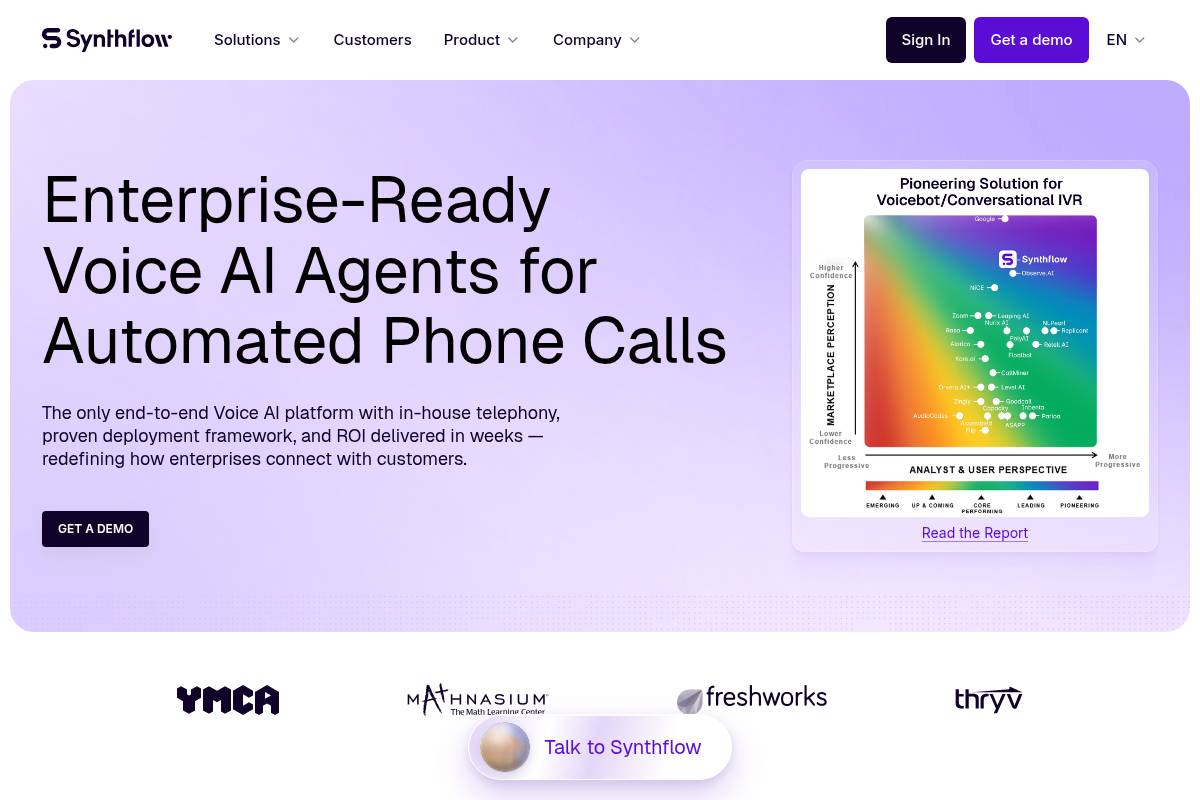
Synthflow AI is a no-code, drag-and-drop AI voice agent platform designed for agencies and business teams needing rapid deployment of inbound and outbound calling workflows with strong compliance posture.
Key Features
No-Code Visual Builder: Drag-and-drop conversation builder enabling users to create complex, multi-branch call flows without coding.
HIPAA on Enterprise Plan: SOC 2, GDPR, and ISO 27001 are standard; Enterprise plan specifically adds HIPAA compliance and dedicated architecture support.
Integration Library: Over 50 native connections including GoHighLevel, ServiceTitan, and HubSpot.
White-Label & Agency Tools: Industry-leading white-label and subaccount model for agency use cases.
Pricing: Pay-as-you-go approximately $0.09/min for voice engine, totaling around $0.14/min before telephony. Enterprise contracts start at $30,000 per year.
Best For
Synthflow AI suits agencies and non-technical healthcare or insurance teams requiring rapid HIPAA-compliant voice agent deployment without extensive developer involvement. Note that HIPAA compliance is exclusively available on the Enterprise plan.
Pros and Cons
Pro: Industry-leading agency and white-label toolset.
Pro: Large native integration library reduces custom development need.
Pro: Fast time-to-deployment for standard inbound and outbound workflows.
Con: HIPAA compliance restricted to Enterprise plan.
Con: Real all-in cost materially higher than advertised base rate.
Rating: 8.3/10
5. Thoughtly — Best for Omni-Channel Lead Qualification Across Voice, SMS, and Email
5. Thoughtly — Best for Omni-Channel Lead Qualification Across Voice, SMS, and Email
5. Thoughtly — Best for Omni-Channel Lead Qualification Across Voice, SMS, and Email
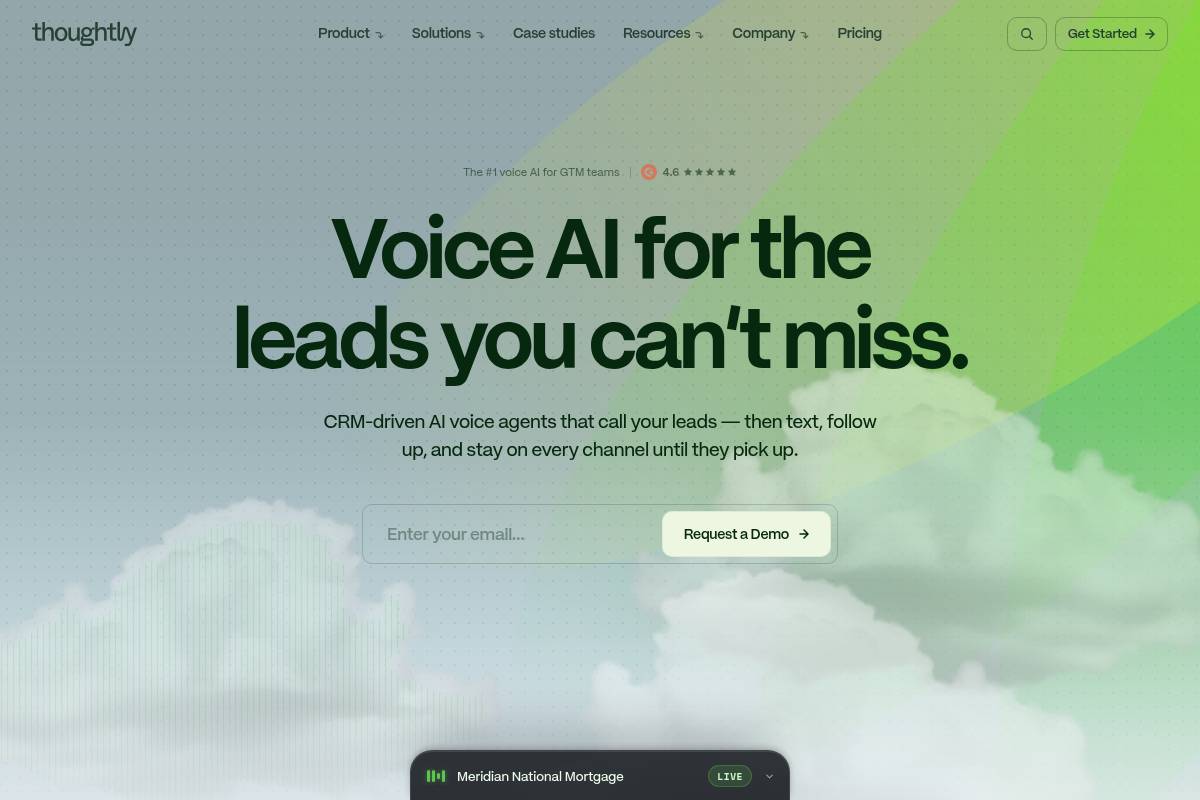
Thoughtly is an AI voice agent platform designed for healthcare and regulated industries, excelling in omni-channel lead qualification across voice, SMS, email, and CRM updates.
Key Features
Omni-Channel Agent Journeys: Handles voice, SMS, email, and CRM workflow actions within the same agent journey.
No-Code Builder: Offers no-code AI voice agent builder for inbound and outbound call automation.
HIPAA on Scale Plan: Annual Scale contract includes HIPAA, SOC 2, PCI, SSO, RBAC, data residency, support SLA, and dedicated account team.
Human Handoff Logic: Structured escalation paths to human agents ensure clean handoff and context transfer.
Pricing: Scale plan approximately $499 per month plus per-minute usage fee.
Best For
Thoughtly suits healthcare and insurance teams managing lead qualification across multiple communication channels, particularly those with moderate call volumes seeking HIPAA-capable agents without engineering support.
Pros and Cons
Pro: True omni-channel capability integrating voice, SMS, email, and CRM within a single agent journey.
Pro: No-code builder lowers entry barrier for non-technical operations teams.
Pro: Essential compliance and security features included on Scale plan.
Con: HIPAA compliance exclusively on Enterprise tiers requiring annual commitment.
Con: Less suitable for very high-volume concurrent call operations.
Rating: 8.1/10
6. Hyro AI — Best for Enterprise Health Systems with Deep EHR Integration
6. Hyro AI — Best for Enterprise Health Systems with Deep EHR Integration Requirements
6. Hyro AI — Best for Enterprise Health Systems with Deep EHR Integration Requirements
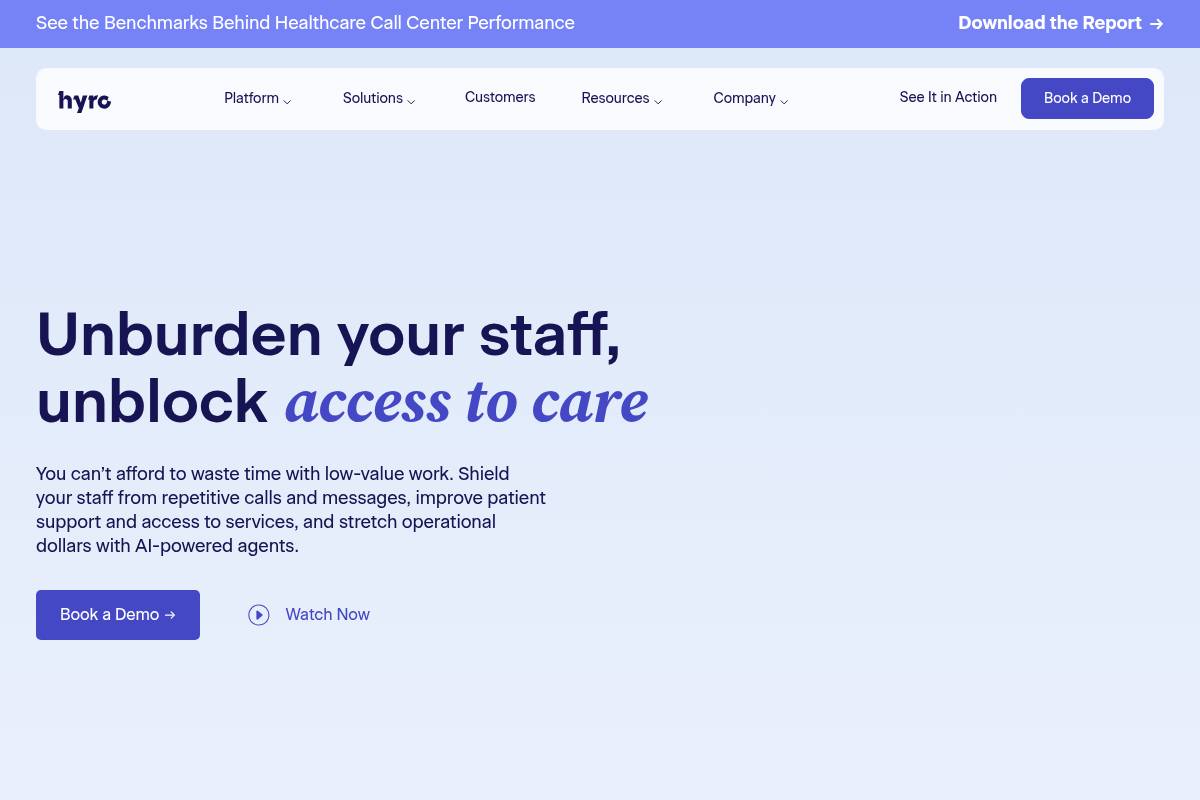
Hyro AI is a conversational AI platform designed for healthcare, excelling in patient scheduling, FAQ automation, provider search, and prescription management across voice, chat, and SMS. It offers deep Electronic Health Record (EHR) and Electronic Medical Record (EMR) integrations and HIPAA-compliant AI interactions.
Key Features
HIPAA & SOC 2 Type II Compliance: Executes Business Associate Agreements with all customers, encrypts all patient data, and stores voice recordings in HIPAA-compliant infrastructure.
Deep EHR Integration: Native integrations with Epic and Oracle Health (Cerner) through FHIR and HL7 protocols.
Multi-Channel Automation: Automates patient interactions for scheduling, FAQ answering, provider search, and prescription management across voice, chat, and SMS.
Audit Trail & Access Controls: Role-based access controls limit data access; comprehensive audit logging tracks all system access and interactions.
Pricing: Enterprise-level, quote-based pricing.
Best For
Hyro AI suits large health systems, hospital networks, and multi-location medical groups requiring deep EHR integration and proven scalability. Intermountain Health reported 85% reduction in call abandonment and 79% decrease in wait times after deploying Hyro.
Pros and Cons
Pro: Healthcare-exclusive focus ensures deep calibration for clinical workflows.
Pro: Proven at health system scale with documented operational outcomes.
Pro: Strong EHR write-back and FHIR/HL7 support.
Con: Enterprise-level pricing typically excludes smaller practices.
Con: No publicly listed pricing; requires multi-week procurement process.
Rating: 8.0/10
7. SuperDial — Best for Revenue Cycle Management Teams Automating Payer Outreach
7. SuperDial — Best for Revenue Cycle Management Teams Automating Payer Outreach
7. SuperDial — Best for Revenue Cycle Management Teams Automating Payer Outreach
SuperDial is a specialized, HIPAA-compliant voice AI platform for healthcare revenue cycle management (RCM), automating outbound payer calls for eligibility verification, prior authorization, claims follow-up, and credentialing.
Key Features
HIPAA & SOC 2 Type II: HIPAA-compliant with SOC 2 Type II certification. Requires Business Associate Agreement (BAA) before PHI exchange, utilizing deterministic call flows and immutable audit logs.
EHR Integration: Integrates with any EHR/PMS via HL7, FHIR, and REST APIs, with specific support for Epic, Cerner, and Athenahealth.
Zero-Day Retention: Zero-day retention agreements with underlying AI models prevent data persistence.
Human Escalation Backup: Human call center prepared to intervene when AI cannot complete a task.
Pricing: Custom enterprise pricing.
Best For
SuperDial serves Revenue Cycle Management teams, Dental Support Organizations (DSOs), Management Services Organizations (MSOs), and provider groups automating payer phone interactions. Delivers 67% cost savings, 4x team throughput, and 90% automation success rate.
Pro: Zero-day retention agreements serve as significant compliance differentiator.
Pro: Human fallback built into service architecture.
Con: Outbound-only; does not support inbound patient qualification.
Con: No published pricing; likely out of reach for SMB clinics.
Rating: 7.8/10
8. Greetmate AI — Best for Healthcare Practices Needing Fully Managed HIPAA Deployments
8. Greetmate AI — Best for Healthcare Practices Needing Fully Managed HIPAA Deployments
8. Greetmate AI — Best for Healthcare Practices Needing Fully Managed HIPAA Deployments
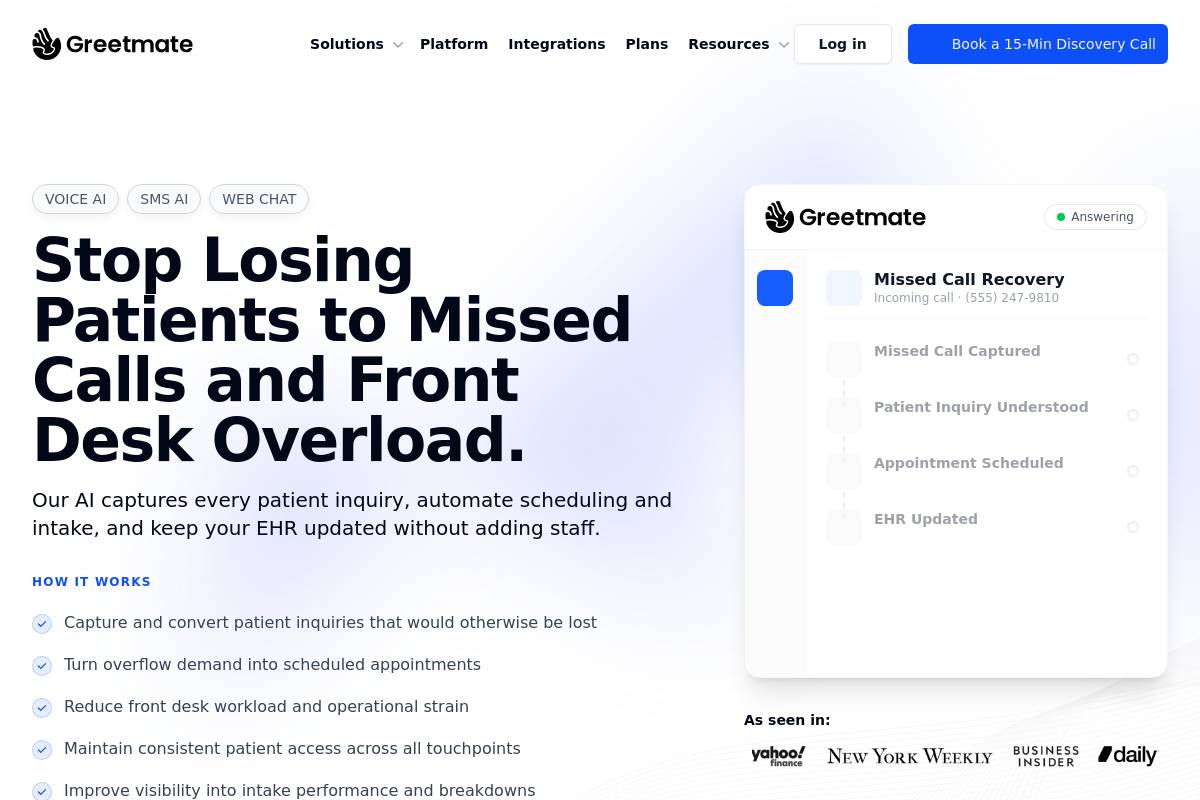
Greetmate AI is a HIPAA-ready voice AI platform designed for healthcare communication workflows. It offers fully managed implementation, eliminating the need for practices to manage their own compliance stack or Business Associate Agreement (BAA) chain.
Key Features
Fully Managed HIPAA Stack: Manages the full infrastructure stack and signs a direct BAA with managed implementation.
No-Code Workflow Builder: Built around a no-code workflow builder, custom call flows, intake capture, triage routing, reporting, and SMS coordination.
Post-Call Automation: Triggers SMS confirmations, logs call outcomes, routes call summaries to coordinators, and generates multi-location scheduling reports.
Customizable Workflows: Most customizable option for non-standard workflows among HIPAA-compliant AI receptionists.
Pricing: Custom pricing through managed implementation.
Best For
Greetmate AI suits independent practices, multi-site clinic groups, and specialty practices needing fully managed, HIPAA-ready voice AI deployment without internal IT or compliance teams managing vendor BAA chains.
Con: Not designed for enterprise health systems requiring massive concurrent call capacity.
Con: No self-serve tier; all deployments require implementation engagement.
Rating: 7.7/10
9. Bland AI — Best for Developer Teams Running High-Volume Outbound Campaigns
9. Bland AI — Best for Developer Teams Running High-Volume Outbound Compliance-Heavy Campaigns
9. Bland AI — Best for Developer Teams Running High-Volume Outbound Compliance-Heavy Campaigns
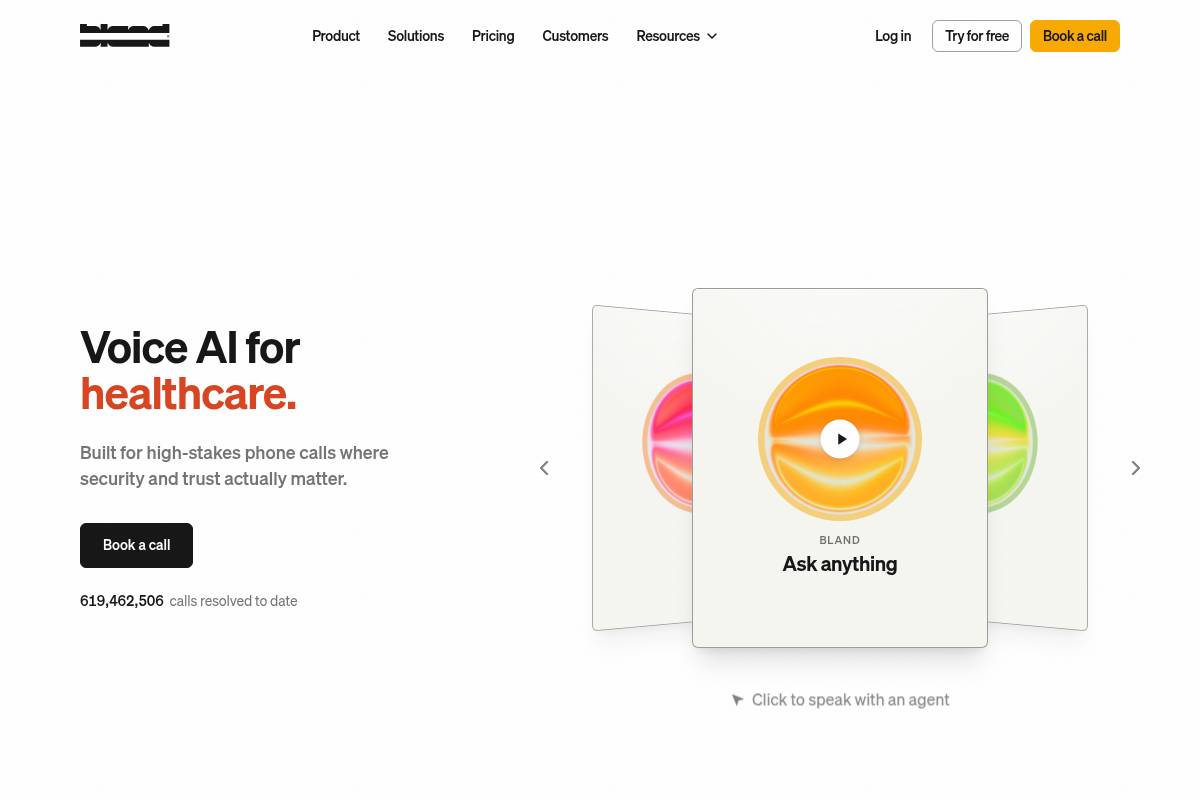
Bland AI is an enterprise-grade, developer-first AI voice platform designed for high-volume outbound campaigns requiring deep compliance and dedicated infrastructure.
Key Features
HIPAA on Business Tiers: HIPAA compliance included on business tiers without enterprise-only gate.
Structured Data Capture: Every call generates structured data output enabling direct integration with back-end CRM and compliance systems.
High-Volume Outbound: Architected for large outbound call campaigns with deterministic behavior and full auditability.
Pricing: Custom enterprise pricing.
Best For
Bland AI suits engineering teams at insurance companies, financial services firms, and healthcare payer organizations running large-scale outbound voice qualification campaigns requiring dedicated infrastructure and documented compliance controls.
Pros and Cons
Pro: Dedicated orchestration server reduces shared-infrastructure compliance risk.
Pro: Structured call data capture enables tight compliance reporting integration.
Con: Custom pricing requires direct sales engagement.
Rating: 7.5/10
10. CloudTalk — Best for Mid-Size Teams Needing CRM-Native Voice AI with Built-In HIPAA
10. CloudTalk — Best for Mid-Size Teams Needing CRM-Native Voice AI with Built-In HIPAA
10. CloudTalk — Best for Mid-Size Teams Needing CRM-Native Voice AI with Built-In HIPAA
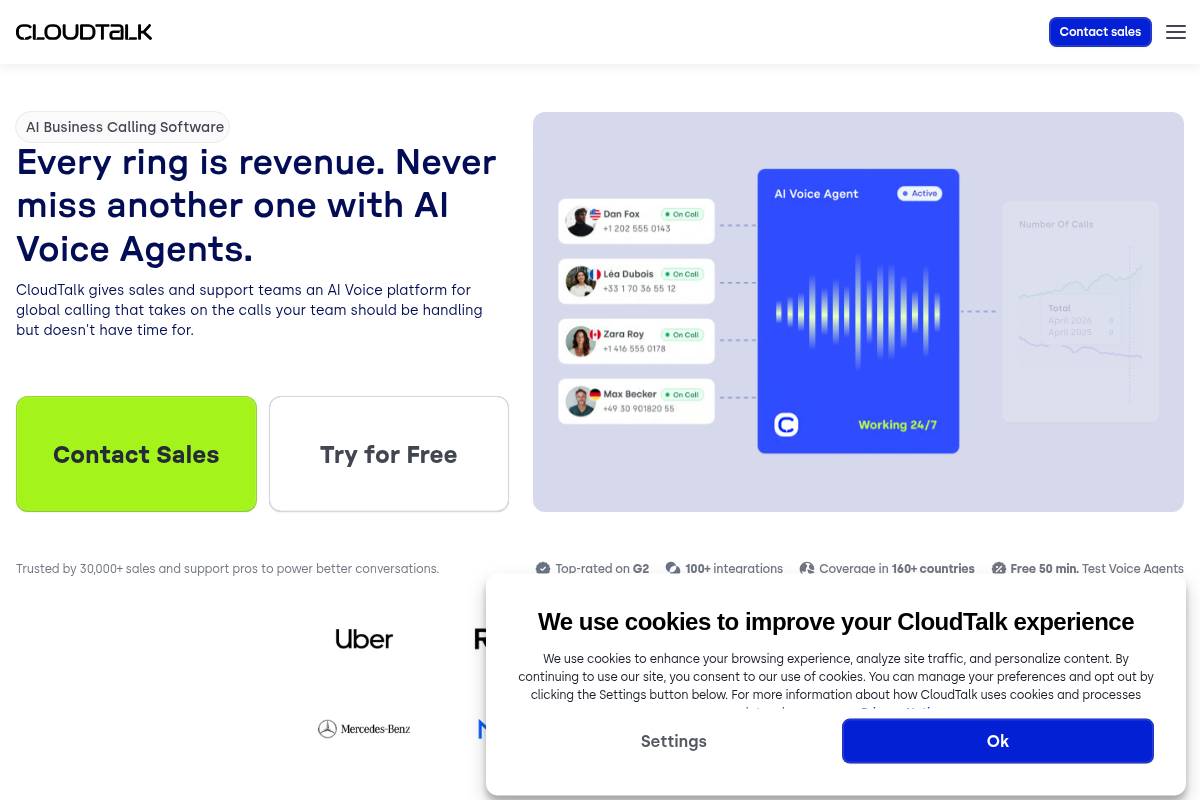
CloudTalk is an AI-powered calling platform designed for mid-size healthcare and insurance teams. It combines voice agent automation with native CRM logging, multilingual support, and built-in HIPAA compliance.
Key Features
HIPAA Compliance with BAA: HIPAA-compliant with Business Associate Agreement support. Ensures secure handling of Protected Health Information across recording and transcription pipeline, alongside GDPR and SOC 2 Type I and Type II certifications.
CRM-Native Integration: Native integration with major CRM systems enabling seamless synchronization of call outcomes, recordings, and lead qualification data.
Urgency-Based Routing: Ensures critical calls never sit in a queue.
Fast Agent Configuration: Configure a voice agent in under 10 minutes with 50 free AI Voice Agent minutes to test.
Multilingual Support: Native multilingual call handling.
Pricing: Plans start from $25 per user per month; AI Voice Agent features billed separately.
Best For
CloudTalk suits mid-size healthcare teams and insurance firms relying on CRM-driven workflows, allowing them to add compliant AI voice qualification without deploying a separate platform.
Pros and Cons
Pro: HIPAA with BAA included in standard plans.
Pro: CRM-native architecture simplifies compliance logging and lead handoff.
Pro: Fast setup with free trial minutes.
Con: AI voice agent features are add-on priced.
Con: Less suitable for pure-AI, high-volume autonomous calling.
Rating: 7.4/10
Full Comparison: All 10 Vapi Alternatives
Tool
BAA Available
SOC 2 Type II
GDPR
ISO 27001
No-Code Builder
EHR Integration
Inbound + Outbound
Pricing Model
Kolsetu Elba
✓
✓
✓
✓
✓
✓
✓
Custom enterprise
Retell AI
✓
✓
✓
✗
✓
Partial (API)
✓
Pay-as-you-go
Telnyx Voice AI
✓
✓
✓
✗
✗
Partial (API)
✓
$0.05/min all-in
Synthflow AI
✓ (Enterprise)
✓
✓
✓
✓
Partial (API)
✓
Pay-as-you-go / Enterprise
Thoughtly
✓ (Scale)
✓
✓
✗
✓
Partial (API)
✓
~$499/mo + per-min
Hyro AI
✓
✓
✓
✗
Partial
✓ (Epic, Cerner)
✓
Custom enterprise
SuperDial
✓
✓
✗
✗
✗
✓ (Epic, Cerner, Athena)
Outbound only
Custom enterprise
Greetmate AI
✓
✓
✓
✗
✓
Partial (API)
✓
Custom (managed)
Bland AI
✓
✓
✓
✗
Partial
Partial (API)
✓
Custom enterprise
CloudTalk
✓
✓
✓
✗
✓
CRM-native
✓
From $25/user/mo
How to Choose the Right Platform
By Team Size
Solo practices and small teams (1–10 staff): Greetmate AI and CloudTalk offer fast onboarding with compliance included. Thoughtly is a strong no-code option for multi-channel outreach.
Mid-size organizations (10–200 staff): Retell AI or Synthflow AI provide compliance-capable platforms with customization flexibility. Kolsetu Elba is strongest for simultaneous HIPAA, GDPR, and ISO 27001 requirements.
Enterprise and health systems (200+ staff, multi-location): Hyro AI for patient-access workflows with deep EHR integration, SuperDial for RCM and payer-side outreach, and Telnyx for infrastructure teams building custom compliant voice stacks.
By Budget
Transparent per-minute pricing: Telnyx ($0.05/min all-in) and Retell AI ($0.07/min base) offer the clearest cost models. CloudTalk provides a predictable per-user monthly base with AI features as an add-on.
Enterprise budget with custom scoping: Kolsetu Elba, Hyro AI, SuperDial, and Greetmate AI operate on custom pricing, typically justifying cost through faster ROI from compliance architecture and operational outcomes.
By Use Case
Inbound lead qualification: Kolsetu Elba, Greetmate AI, or Thoughtly all handle inbound with HIPAA controls and structured handoff logic.
Outbound payer and RCM calls: SuperDial is the category specialist.
Multi-channel qualification: Thoughtly leads with omni-channel agent journey architecture.
High-volume, ultra-low-latency operations: Telnyx for infrastructure-owning teams; Retell AI for developer-controlled deployments. For additional buying guidance, see Best HIPAA-Compliant Voice AI Agents in 2026.
What Is HIPAA-Compliant Voice Lead Qualification?
HIPAA-compliant voice lead qualification is the process of using AI voice agents to collect and assess lead or patient data over the phone while maintaining all technical, administrative, and physical safeguards HIPAA requires. A compliant voice AI system requires BAAs across every layer: LLM, STT, TTS, telephony, and platform itself. For a more detailed primer, see Best HIPAA-Compliant Voice AI Agents in 2026.
Compliance Layer
What to Verify
Risk If Missing
Platform BAA
Signed agreement naming your organization
Full PHI exposure liability
LLM Provider
HIPAA-compliant API agreement with zero retention
Training data exposure
STT (Speech-to-Text)
Encrypted transcription, no data retention
Transcript PHI leakage
TTS (Text-to-Speech)
No storage of synthesized audio containing PHI
Output data breach risk
Telephony Carrier
Carrier-level BAA or HIPAA-eligible service
Call recording non-compliance
Conclusion
The market for Vapi alternatives has matured significantly in 2026. Every platform here offers more accessible compliance than Vapi's developer-only model, which requires customers to manage their own provider BAA chain.
Our top pick is Kolsetu Elba, which operates with the principle that secure automation in regulated sectors must be built in—not bolted on. For teams with developer capacity, Retell AI and Telnyx Voice AI are the strongest technical alternatives. For no-code deployment speed, Synthflow AI and Thoughtly are the fastest paths to a working HIPAA-capable agent. For healthcare RCM specialization, SuperDial is in a category of its own.
Frequently Asked Questions
What are the best Vapi alternatives for HIPAA-compliant voice lead qualification in 2026?
The top alternatives include Kolsetu Elba (best overall for regulated sectors), Retell AI (best for developer teams), Telnyx Voice AI (best for full-stack owned infrastructure), Synthflow AI (best no-code option), Thoughtly (best for omni-channel qualification), Hyro AI (best for enterprise health systems), and SuperDial (best for RCM payer calls). Each offers a BAA and HIPAA safeguards that Vapi only provides as a high-cost add-on.
Why is Vapi not ideal for HIPAA-compliant healthcare voice use cases?
Vapi's HIPAA path requires customers to bring their own HIPAA-compliant API keys for every model layer, ensure PHI is not stored via Vapi's endpoints through custom configuration, and accept that enabling HIPAA mode disables call logs and transcription review. This places significant compliance management burden on organizations and requires an Enterprise plan or $2,000 monthly add-on.
What does a HIPAA-compliant voice AI platform actually need to have?
A HIPAA-compliant AI voice agent needs secure PHI storage and transmission, encrypted recordings and transcripts, detailed audit logs, strict access controls, and a signed BAA. Verify that every sub-processor—LLM, STT engine, TTS engine, and telephony carrier—is also covered by a compliant agreement, since each layer touches PHI during a call.
Which HIPAA-compliant voice AI platform is best for healthcare lead qualification without an engineering team?
For organizations without internal engineering support, Greetmate AI (fully managed implementation with a direct BAA), Thoughtly (no-code builder with HIPAA on the Scale plan), and CloudTalk (fast setup with built-in HIPAA BAA support) are the strongest options.
How does the ranking factor in pricing?
The ranking weights compliance architecture at 30% and pricing transparency at 10%. Platforms that advertise low per-minute rates but add HIPAA surcharges, separate billing, or hidden fees rank lower on cost transparency. Telnyx ($0.05/min all-in) and Retell AI (transparent pay-as-you-go) scored highest on pricing clarity.
What is the difference between a BAA and HIPAA compliance?
A Business Associate Agreement (BAA) is a legal contract establishing that a vendor accepts responsibility for protecting PHI under HIPAA rules. HIPAA compliance is broader—it includes the BAA, plus technical safeguards (encryption, audit logs, access controls), administrative safeguards (policies and training), and physical safeguards (data center security).
Can AI voice agents for lead qualification handle financial services and insurance workflows?
Yes. Kolsetu Elba is purpose-built for highly regulated sectors broadly, covering HIPAA, GDPR, and ISO 27001—suitable for financial services firms handling sensitive personal data and insurance companies managing policyholder calls. Telnyx and Retell AI also carry PCI-DSS and SOC 2 Type II compliance relevant to financial services.
How should compliance managers evaluate a voice AI vendor?
Ask for BAA terms, SOC 2 or security documentation, PHI handling procedures, call-recording rules, retention controls, escalation paths, and the exact systems the agent can update. Request written confirmation of which sub-processors the vendor uses for LLM inference, speech-to-text, and text-to-speech—and verify that each sub-processor operates under a HIPAA-compliant agreement.
Methodology: Platforms were selected based on public market presence in the HIPAA-compliant voice AI and AI voice lead qualification categories as of August 2026. Evaluation criteria included compliance documentation (BAA availability, SOC 2 Type II, GDPR), voice quality and latency benchmarks, pricing structure transparency, integration depth with healthcare and CRM systems, and deployment ease. Pricing data was sourced from vendor pricing pages and verified third-party analyses current as of August 2026. Compliance claims should be independently verified with each vendor before deployment. This article is for informational purposes only and does not constitute legal or compliance advice.

 Kolsetu