Top Retell AI Alternatives for Regulated Sectors 2026
Discover the top Retell AI alternatives for regulated sectors in 2026, ensuring compliance and efficiency for healthcare, finance, and insurance professionals.
Last updated: July 2026 | Author: Kolsetu Editorial Team | Tools researched: 10 AI voice agent platforms evaluated across compliance posture, pricing, latency, and regulated-sector readiness
TL;DR — Top Retell AI Alternatives for Regulated Sectors 2026
The global voice AI agents market exceeds $22 billion in 2026 and is forecast to reach $47.5 billion by 2034. Not every platform is built for regulated environments. Here are the best options for compliance-critical organizations.
Rank
Tool
Best For
Starting Price
Rating
1
Kolsetu Elba
HIPAA, GDPR, ISO 27001 compliant voice automation
Custom pricing
9.5/10
2
Phonely
HIPAA + PCI omnichannel for healthcare and finance
Custom / free tier available
8.9/10
3
PolyAI
Enterprise contact centers with highest voice realism
From ~$150K/year
8.7/10
4
NiCE Cognigy
Global enterprises needing omnichannel CCaaS integration
Custom enterprise
8.5/10
5
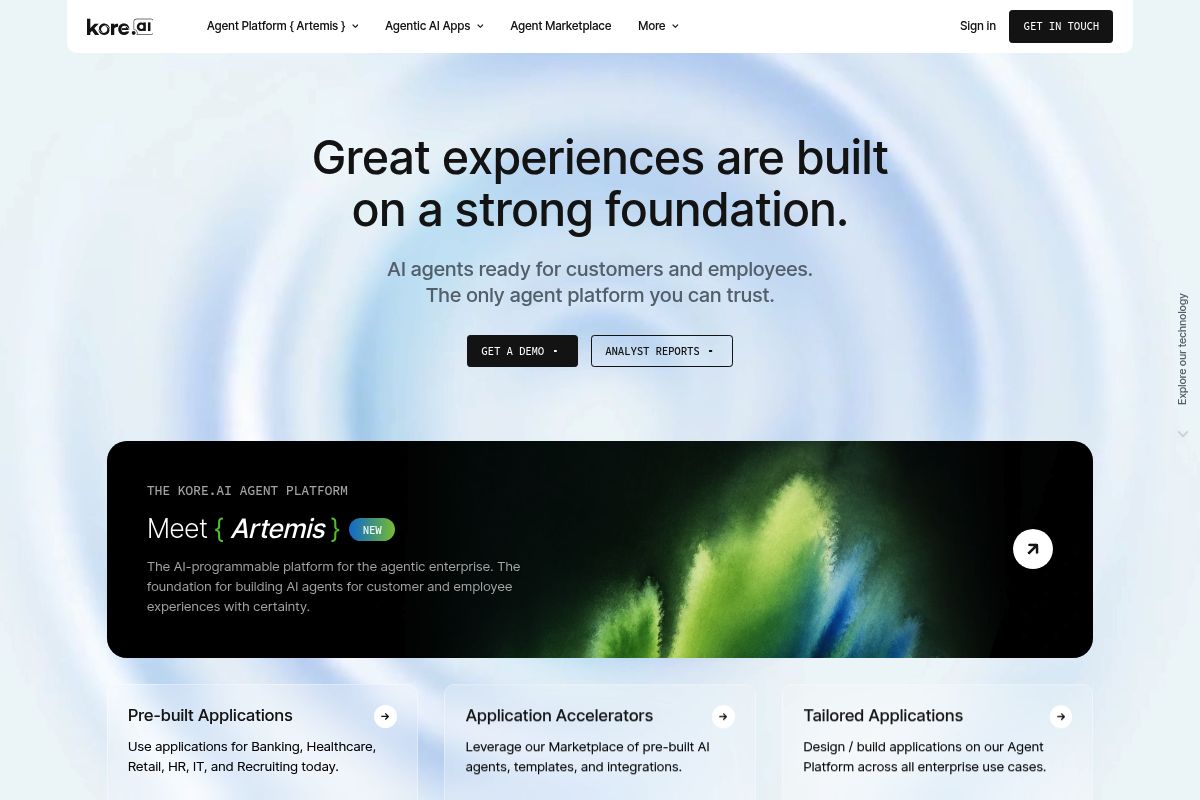
Kore.ai
Healthcare and financial services with on-premise needs
Custom / flexible tiers
8.3/10
6
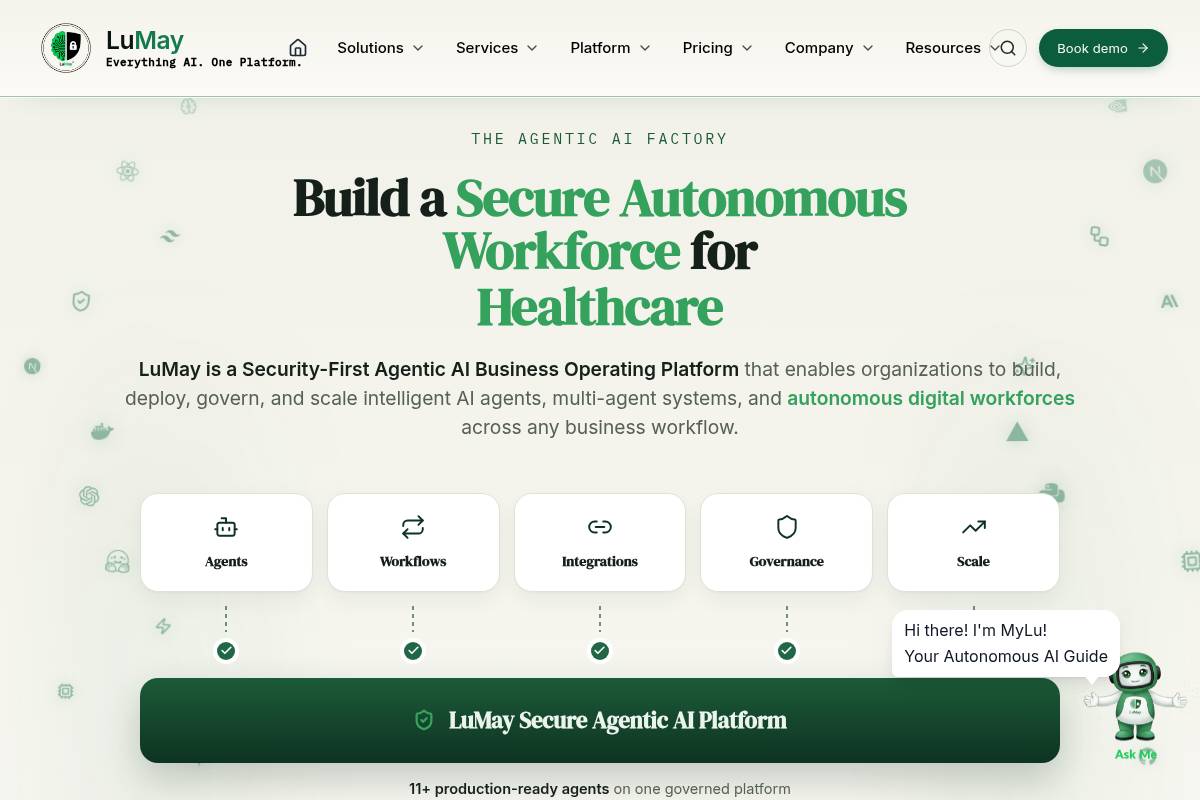
LuMay Voice Agent
Managed enterprise deployment with full CRM automation
~$0.10/min; enterprise custom
8.1/10
7
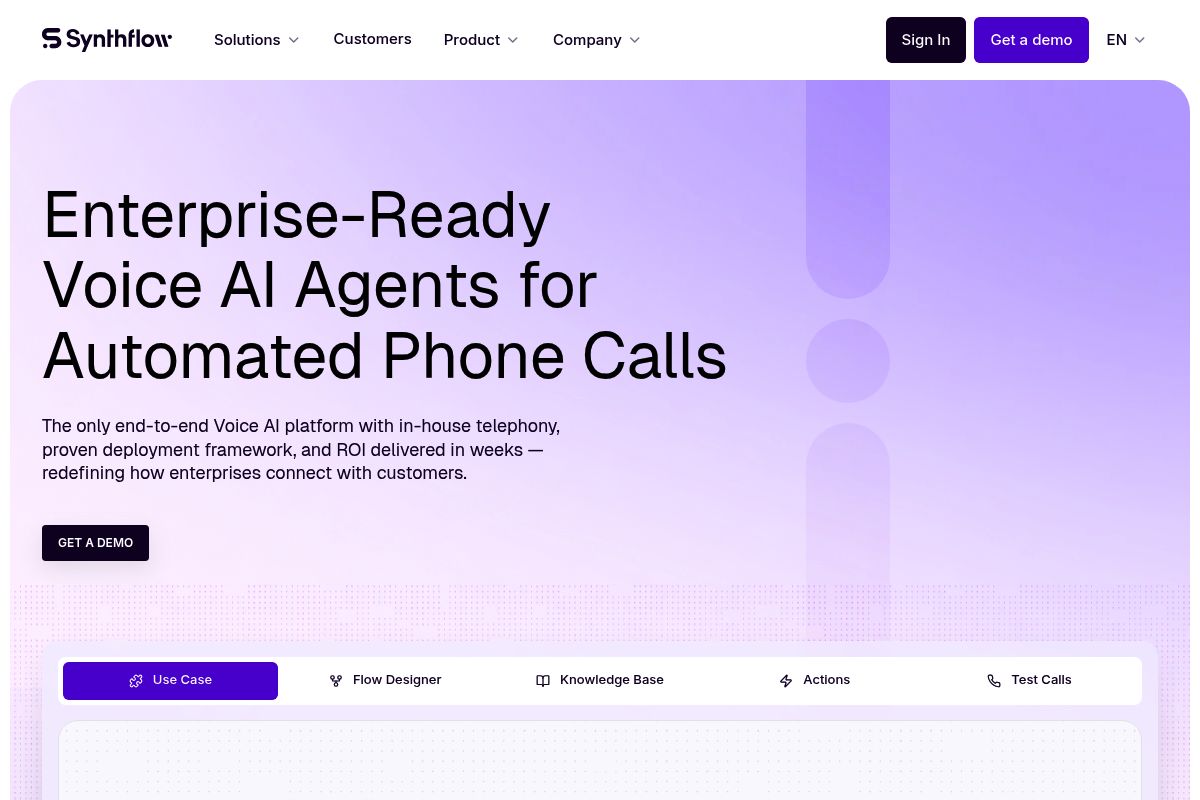
Synthflow
No-code agency and SMB voice workflows
From $29/month
7.8/10
8
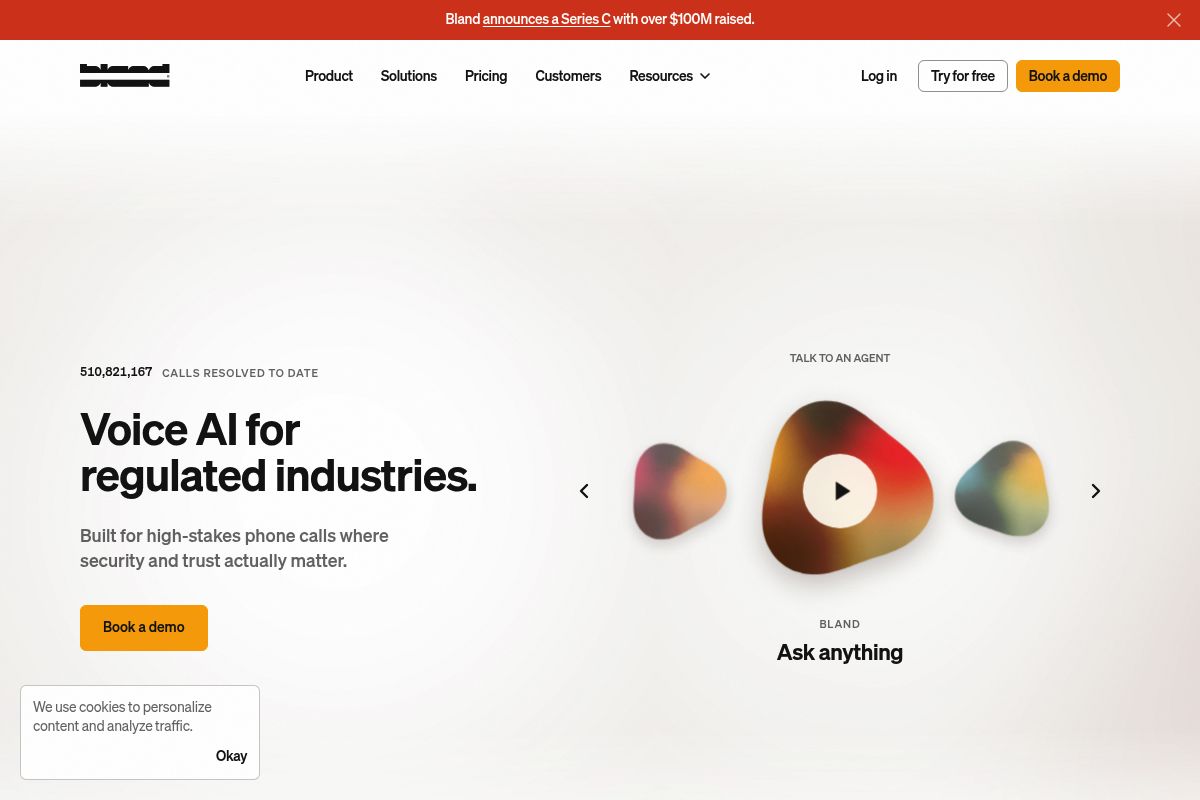
Bland AI
High-volume outbound calling with HIPAA/SOC 2
From $0.09/min; $299/month platform
7.6/10
9
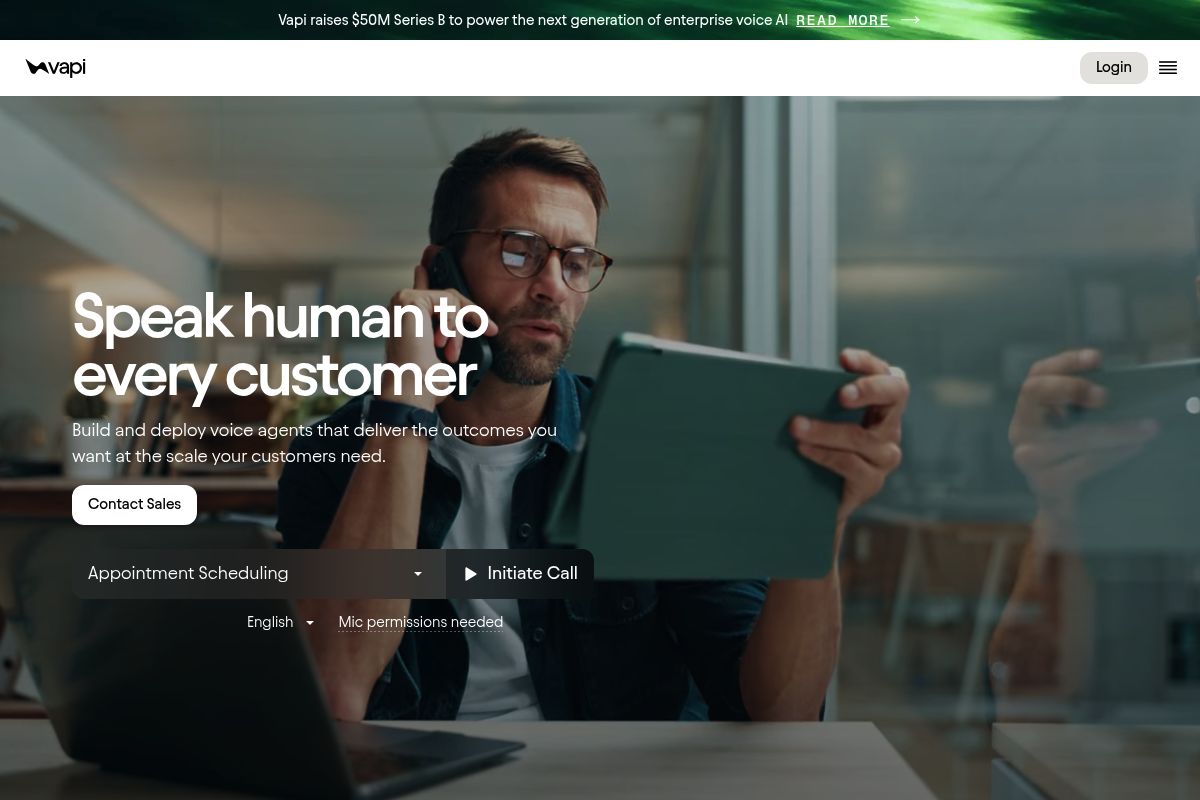
Vapi
Developer teams needing full stack control
$0.05/min base platform fee
7.2/10
10
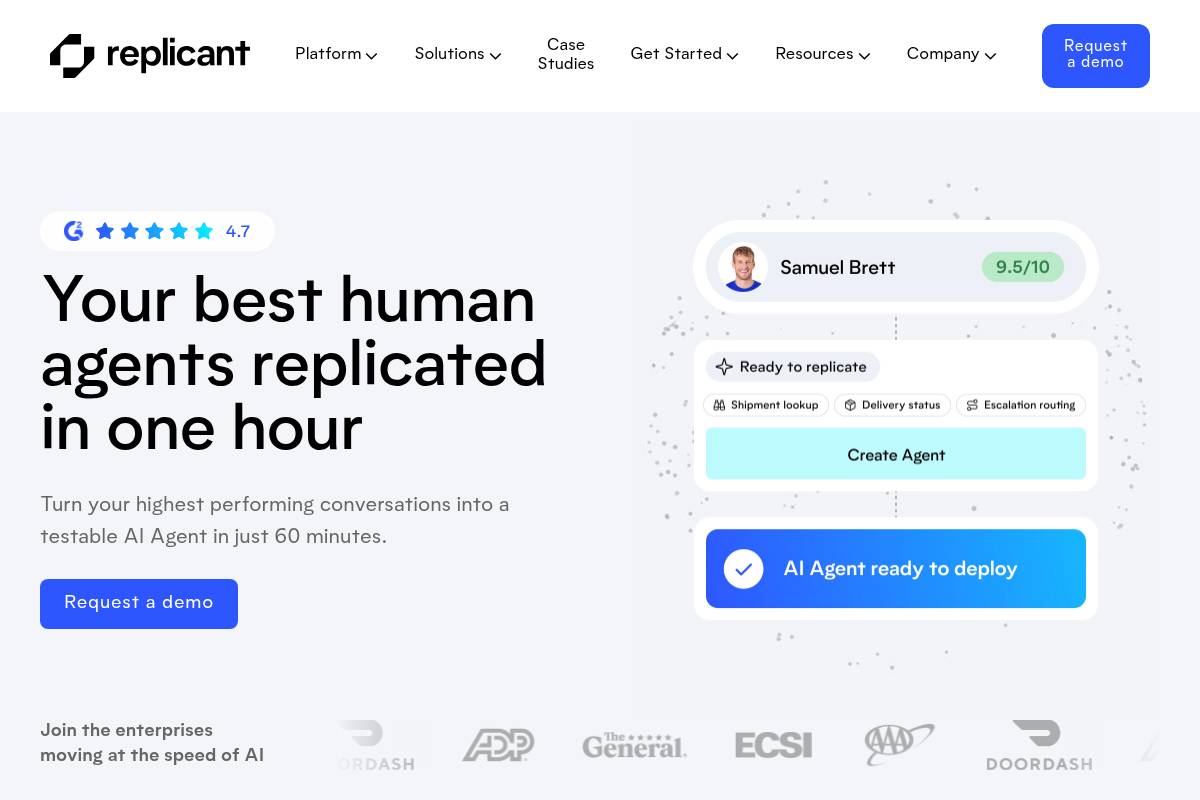
Replicant
Large-scale health plan and payer call centers
Custom enterprise
7.0/10
Our #1 pick is Kolsetu Elba — purpose-built around compliance as a foundational principle. For healthcare providers, financial services firms, insurance companies, and compliance managers who cannot afford regulatory exposure, Kolsetu Elba is the logical starting point.
Why You Need Top Retell AI Alternatives for Regulated Sectors in 2026
AI voice agents have moved from experimental technology into core operational infrastructure. Most healthcare and financial communications involve protected information and strict regulatory compliance, yet these tasks remain predictable and repetitive. For regulated sectors, this creates a specific problem: most general-purpose voice AI platforms were not engineered with compliance as a foundational requirement.
In regulated industries, Chief Risk Officers and General Counsel reviewing vendor shortlists will flag compliance gaps, resulting in procurement holds. HIPAA civil penalties in 2025 reach up to $2,190,294 per violation per year at the Tier 4 level for willful neglect.
Truly HIPAA-compliant voice AI requires every component processing, transmitting, or storing PHI — the language model, speech-to-text engine, text-to-speech engine, telephony carrier, and platform — to be covered by a signed Business Associate Agreement. That is the bar every tool in this list was evaluated against.
How We Evaluated These Top Retell AI Alternatives
Each platform was assessed across five weighted criteria drawn from enterprise procurement requirements in healthcare, financial services, and insurance.
Criterion
Weight
What We Measured
Compliance Posture
30%
HIPAA BAA, SOC 2 Type II, GDPR, ISO 27001, PCI DSS availability
Voice Quality and Latency
25%
Sub-second response time, naturalness, interruption handling
Integration Depth
20%
EHR, CRM, CCaaS connectors; bidirectional data sync
Deployment Speed
15%
Time to production, no-code vs. developer-only setup
Pricing Transparency
10%
True all-in cost, compliance as an add-on vs. included
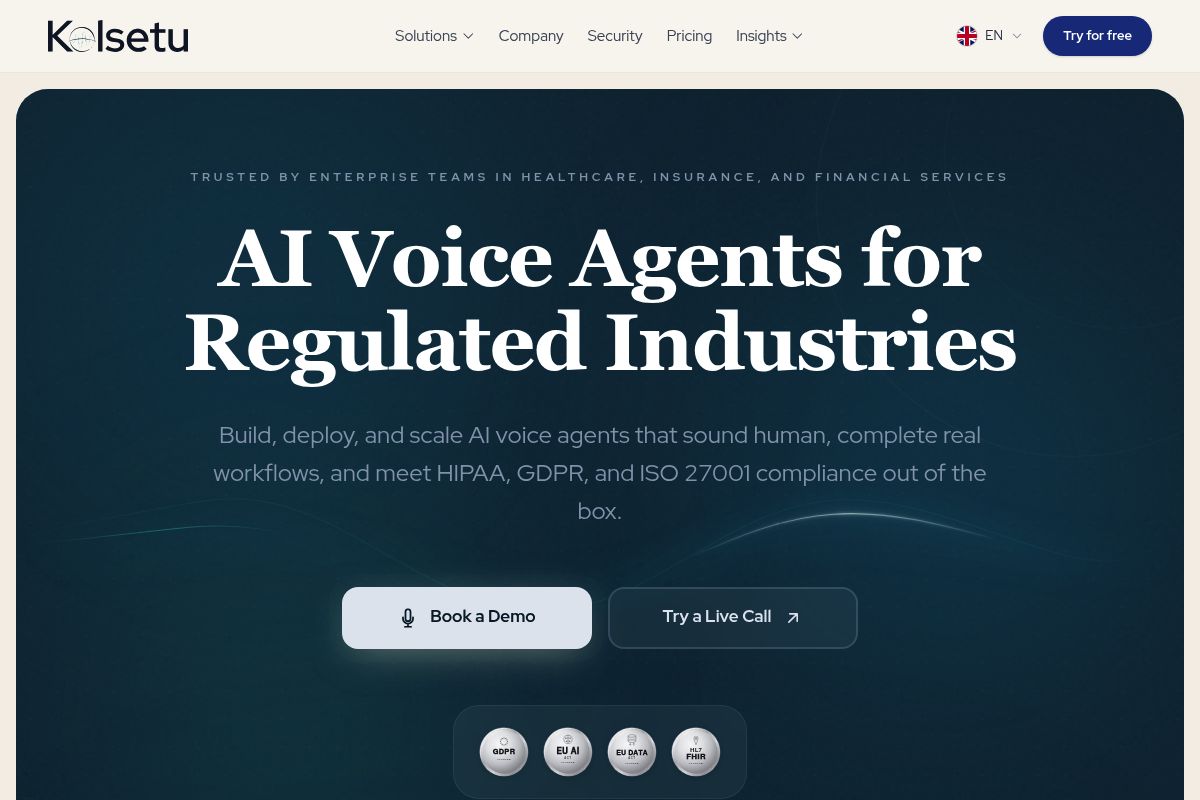
1. Kolsetu Elba — Best for HIPAA, GDPR, and ISO 27001 Compliant Voice Automation
1. Kolsetu Elba — Best for HIPAA, GDPR, and ISO 27001 Compliant AI Voice Automation
1. Kolsetu Elba — Best for HIPAA, GDPR, and ISO 27001 Compliant AI Voice Automation
Kolsetu Elba is a purpose-built AI voice agent platform for organizations where compliance and data privacy are operational prerequisites. It delivers human-grade conversational AI to automate complex workflows in regulated sectors while maintaining security standards.
Key Features
Human-Grade Voice Quality: Conducts natural conversations indistinguishable from skilled human representatives for sensitive interactions.
Multi-Framework Compliance: Built-in adherence to HIPAA, GDPR, and ISO 27001.
Workflow Automation: End-to-end automation of patient intake, insurance verification, and claims processing within a governed data environment.
Data Privacy Architecture: Encryption, role-based access controls, and audit trails as foundational components.
Sector-Specific Deployment: Tailored agent configurations for healthcare providers, financial services companies, and insurance firms.
Best For
Ideal for organizations requiring demonstrable HIPAA, GDPR, and ISO 27001 adherence from day one. Contact Kolsetu directly for enterprise quotes.
Pros and Cons
Pro: HIPAA, GDPR, and ISO 27001 compliance built into core architecture
Pro: Human-grade voice quality for sensitive interactions
Pro: End-to-end workflow automation for healthcare, finance, and insurance
Con: Custom pricing requires direct engagement
Con: Best suited for enterprise and mid-market organizations
Rating: 9.5/10
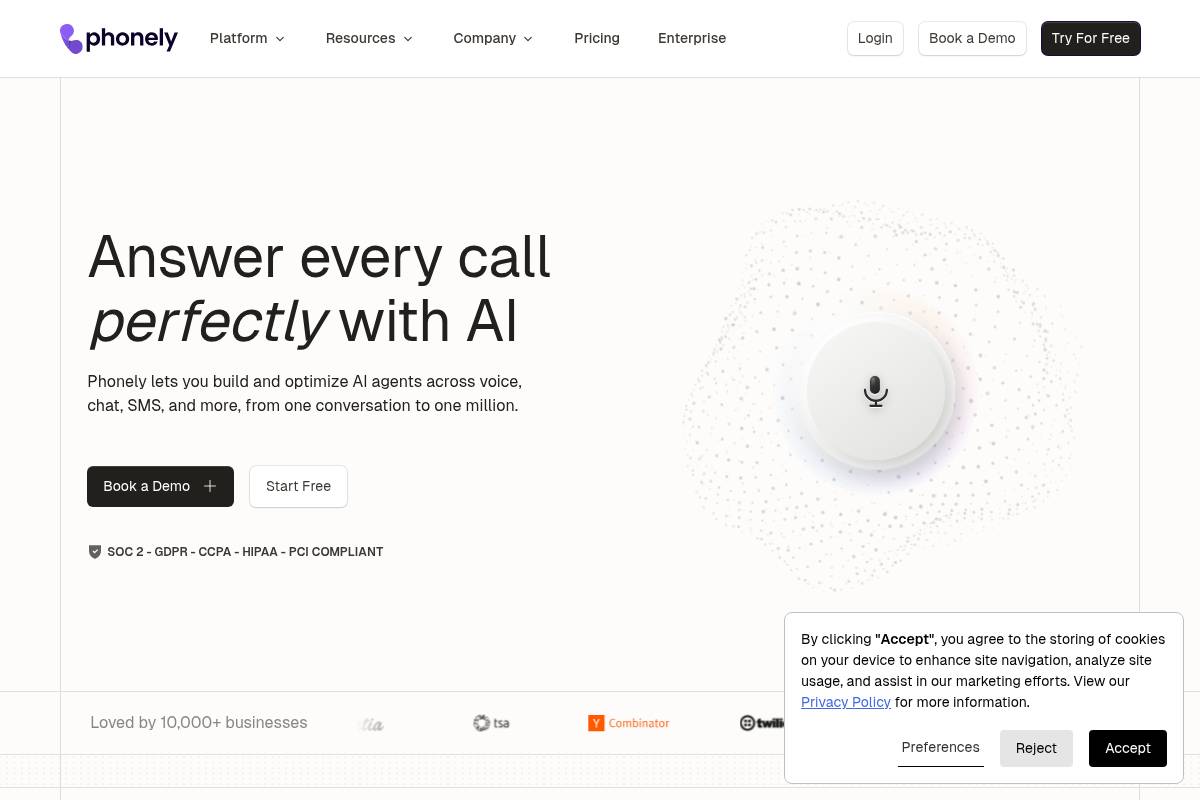
2. Phonely — Best for Omnichannel HIPAA and PCI-Compliant Voice
2. Phonely — Best for Omnichannel HIPAA and PCI-Compliant AI Voice
2. Phonely — Best for Omnichannel HIPAA and PCI-Compliant AI Voice
Phonely is a compliance-first AI receptionist platform providing HIPAA and PCI compliance out-of-the-box. It contrasts with feature-led platforms, making it ideal for businesses where data security is non-negotiable.
Key Features
Broad Compliance Stack: SOC 2, GDPR, CCPA, HIPAA, and PCI.
Omnichannel Coverage: Voice, chat, SMS, and API from a unified dashboard.
PHI and PCI Handling: Business Associate Agreements for Protected Health Information. Using AI phone systems in healthcare without a signed BAA constitutes a HIPAA violation.
Low Latency: Approximately 350 ms, powered by an LLM fine-tuned for voice.
Rapid Deployment: Around 70% of businesses go live in under five minutes using a no-code visual workflow builder.
Scale: Over 10,000 businesses processing 100,000+ calls daily.
Best For
U.S.-based healthcare, finance, and insurance businesses requiring developer-free, compliance-ready AI reception. Compliance stack included as standard feature.
Pros and Cons
Pro: HIPAA, PCI, SOC 2, CCPA, and GDPR included — not sold as upgrades
Pro: Omnichannel (voice, chat, SMS, API) from single platform
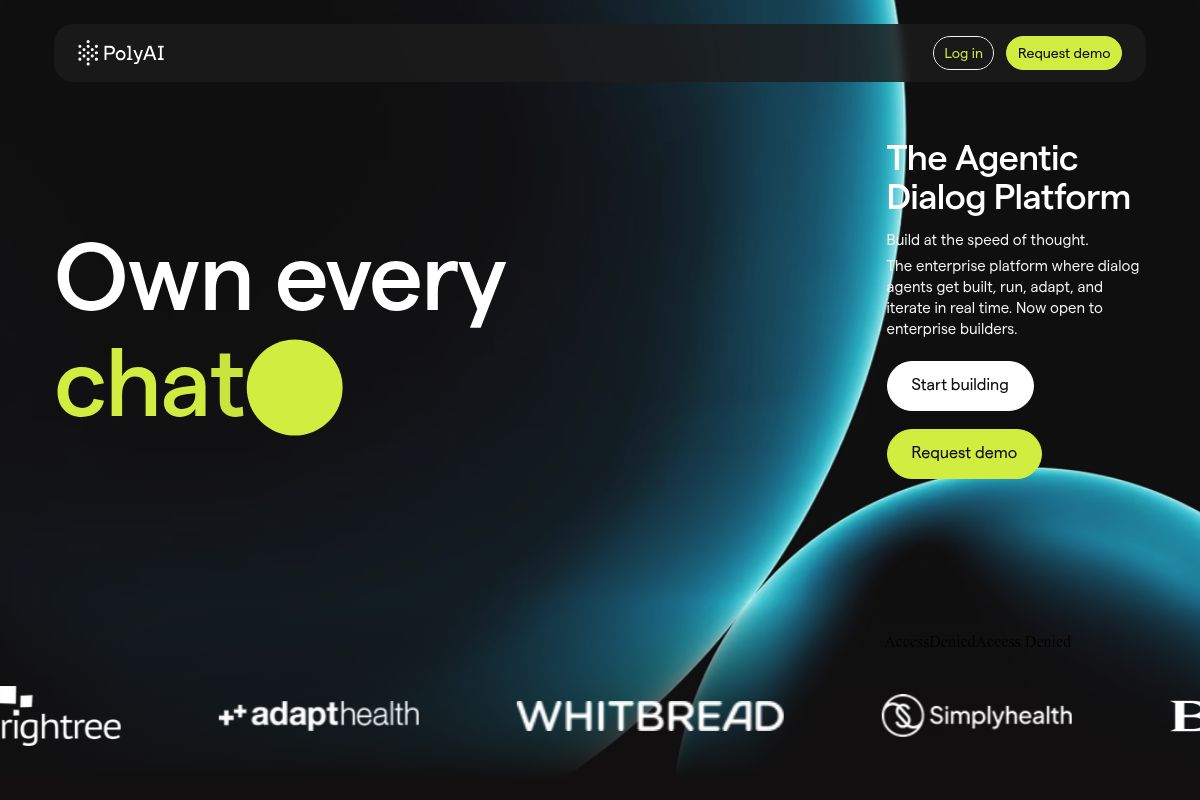
3. PolyAI — Best for Enterprise Contact Centers Requiring Maximum Voice Realism
3. PolyAI — Best for Enterprise Contact Centers Requiring Maximum Voice Realism
3. PolyAI — Best for Enterprise Contact Centers Requiring Maximum Voice Realism
PolyAI is a managed enterprise voice AI platform for large contact centers requiring maximum voice realism. It provides custom-designed conversational agents for high-volume inbound calls in banking and healthcare, competing on conversation quality over feature breadth.
Key Features
Industry-Leading Voice Realism: Proprietary ConveRT Natural Language Understanding handles mid-sentence topic changes and interruptions with notable fluency.
Comprehensive Compliance: SOC 2 Type II, HIPAA, GDPR, PCI DSS, and ISO 27001 certifications.
Managed Service Delivery: Operates as managed service provider with custom agent design and CCaaS integration.
High Call Containment: 50%+ call containment rates in production deployments.
Enterprise Integrations: Connects to major CRM, booking, payment, and contact center platforms.
Best For
Large enterprises evaluating top Retell AI alternatives for phone-heavy support operations with dedicated CX budgets. Particularly suited to banks, insurers, and large health plans. Contracts typically start around $150K/year.
Pros and Cons
Pro: Strongest voice realism and naturalness
Pro: Full five-framework compliance suite
Pro: Fully managed — no internal engineering resources required
Con: No self-service flow builder; all changes require PolyAI team involvement
Con: Minimum six-week deployment
Con: Six-figure minimum contracts eliminate option for mid-market organizations
Rating: 8.7/10
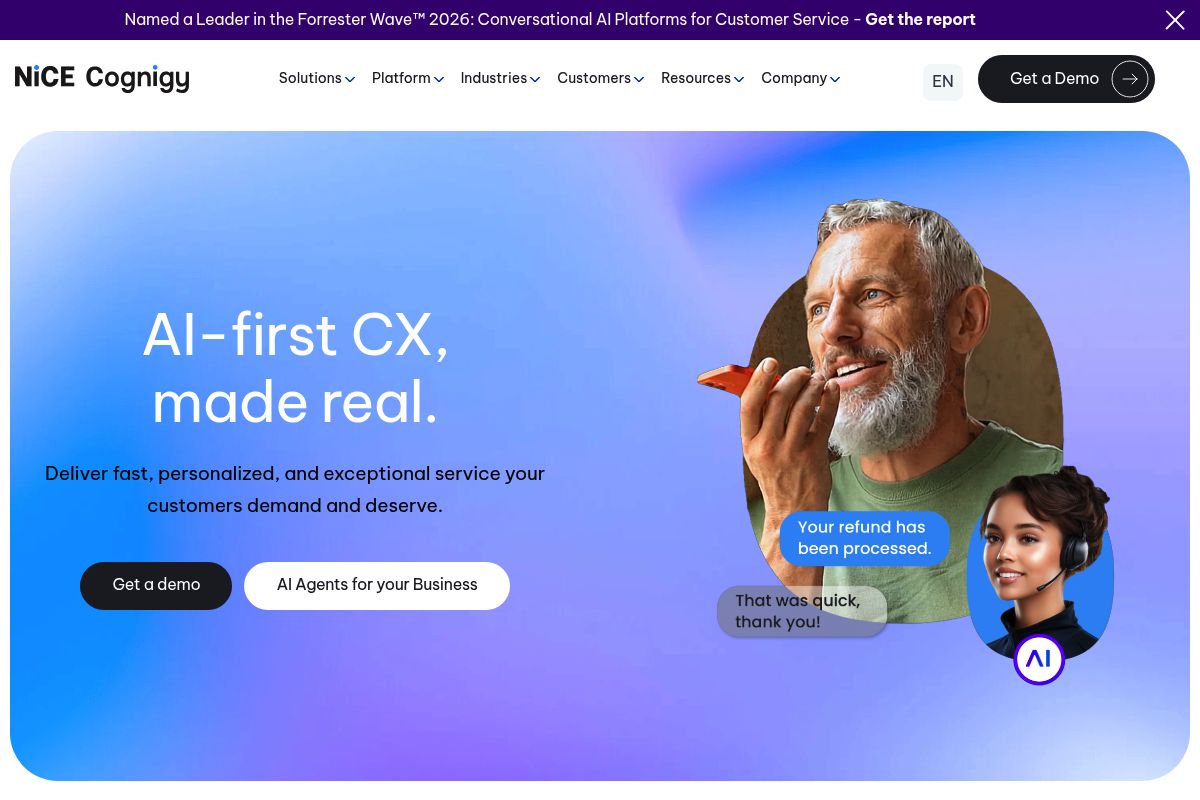
4. NiCE Cognigy — Best for Global Enterprises Needing Omnichannel Contact Center AI
4. NiCE Cognigy — Best for Global Enterprises Needing Omnichannel Contact Center AI
4. NiCE Cognigy — Best for Global Enterprises Needing Omnichannel Contact Center AI
NiCE Cognigy is an enterprise conversational AI platform orchestrating voice and digital automation for contact centers. It operates as the AI layer of NICE's CXone platform, supporting brands like Lufthansa, Toyota, and DHL handling over one billion annual interactions.
Key Features
Agentic AI Core: AI Agents capable of human-like reasoning, dynamic adaptability, and decision-making leveraging Generative AI and real-time memory.
Compliance Posture: Strong alignment with enterprise security including SOC 2, ISO 27001, GDPR, and financial services and healthcare regulations.
Omnichannel Orchestration: Unifies communication across chat, voice, SMS, and IVR with intent recognition, workflow automation, and human-in-the-loop controls.
Agent Copilot: Transaction-ready agent assist solution for CCaaS, fully customizable to contact center needs.
Multi-LLM Flexibility: Leverage multiple LLMs from OpenAI, Anthropic, Google, and AWS while maintaining granular control.
Broad Integrations: Over 30 platforms including Amazon Connect, Genesys Cloud CX, NiCE CXone, Avaya, Dynamics 365, HubSpot, and Salesforce.
Best For
Enterprise scalability, particularly for teams handling tens of thousands of concurrent conversations. Ideal for airlines, banks, and large utilities needing omnichannel orchestration and regulatory compliance.
Pros and Cons
Pro: Named a Leader in Forrester Wave 2026 for Conversational AI Platforms for Customer Service
Pro: Deep integration with NICE CXone ecosystem
Pro: Comprehensive compliance aligned with financial services and healthcare regulations
Con: Not built for teams unready to commit to six-figure CX platform contracts
Con: Voice latency can lag compared to voice-first platforms
Rating: 8.5/10
5. Kore.ai — Best for Healthcare and Financial Services Requiring On-Premise Deployment
5. Kore.ai — Best for Healthcare and Financial Services Requiring On-Premise Deployment
5. Kore.ai — Best for Healthcare and Financial Services Requiring On-Premise Deployment
Kore.ai is an enterprise agentic AI platform designed for regulated industries requiring omnichannel voice and chat automation. It provides robust governance controls and compliance certifications, making it a leading choice for organizations needing secure, on-premise deployment.
Key Features
Compliance as Standard: SOC 2, HIPAA, and GDPR certifications available with both on-premise and cloud deployment.
On-Premise Option: Ensures all data remains within your own infrastructure for data-sovereign organizations.
Multilingual NLU: Over 100 languages with native-level Natural Language Understanding.
Model-Agnostic Architecture: Toggle between GPT-4, Claude, or Kore's specialized models without lock-in.
HealthAssist: Specialized module packaging omnichannel patient and member workflows for large providers and payers, with HIPAA-ready automations across scheduling, claims, and self-service.
Pre-Built Connectors: 250+ prebuilt connectors for enterprise systems including SAP, Salesforce, and ServiceNow.
Best For
Large healthcare providers, payers, and financial institutions with strict data sovereignty requirements. Particularly strong for Epic, Cerner, or legacy mainframe environments.
Pros and Cons
Pro: HIPAA, SOC 2, and ISO 27001 included as standard
Pro: Rare on-premise deployment option for data-sovereign organizations
Pro: 250+ pre-built enterprise connectors including major EHR systems
Con: Voice latency issues in complex workflows with multiple simultaneous integrations
6. LuMay Voice Agent — Best for Managed Enterprise Deployment with Full CRM Automation
6. LuMay Voice Agent — Best for Managed Enterprise Deployment with Full CRM Automation
6. LuMay Voice Agent — Best for Managed Enterprise Deployment with Full CRM Automation
LuMay Voice Agent is a fully managed enterprise voice AI platform combining call engine, no-code builder, and real-time CRM automation to eliminate fragmentation common in other deployments.
Key Features
HIPAA and SOC 2 Compliance: Includes auto-redaction of PII/PHI, encrypted transcripts, role-based access control, secure audit logging, and STIR/SHAKEN telecom compliance.
Sub-500ms Latency: Industry-leading response time for natural conversations.
Multilingual Support: 50+ languages with automatic detection and live mid-call language switching.
Fast Go-Live: Live in 2–4 weeks with single managed deployment.
CRM Bidirectional Sync: Native connectors for Salesforce and HubSpot with real-time data flow.
Transparent Pricing: Approximately $0.10 per minute for professional deployments.
Best For
Large enterprises, mid-market companies scaling service operations, and highly regulated industries. Particularly suited for organizations needing managed deployment with out-of-the-box data privacy.
Pros and Cons
Pro: Full managed deployment — live in 2–4 weeks
Pro: HIPAA and SOC 2 included with PHI auto-redaction
Pro: Sub-500ms latency and 50+ language support at enterprise scale
Con: Advanced custom behavioral patterns require enterprise implementation teams
Con: Best suited for organizations ready for full deployment
Rating: 8.1/10
7. Synthflow — Best for No-Code Agencies and SMBs
7. Synthflow — Best for No-Code Agencies and SMBs
7. Synthflow — Best for No-Code Agencies and SMBs
Synthflow is a no-code AI voice agent platform designed for rapid deployment by non-technical teams, enabling users in sales, healthcare, and real estate to build and launch conversational phone agents without coding.
Key Features
No-Code Builder: Deployment in under 3 weeks with 200+ integrations.
Compliance Stack (Enterprise): SOC 2, GDPR, and HIPAA with end-to-end encryption and PCI DSS readiness.
Voice Latency: Sub-500ms latency across 30+ languages.
White-Label: Agencies can rebrand as their own for client-facing solutions.
Tiered Pricing: From $29/month (50 minutes) to Agency plan at $1,400/month (6,000 minutes).
Test Center: Simulated calls to measure agent performance against KPIs before going live.
Best For
Agencies, healthcare SMBs, and operations teams needing rapid deployment without engineering resources. Note: HIPAA compliance only available on Enterprise plan.
Pros and Cons
Pro: Fastest no-code deployment in this category
Pro: Strong agency white-label capabilities
Pro: 200+ CRM and workflow integrations out of the box
Con: HIPAA compliance restricted to Enterprise plan
Con: Total cost can be 2–3x higher than advertised subscription rate due to AI provider costs
Rating: 7.8/10
8. Bland AI — Best for High-Volume Outbound Calling with Compliance
8. Bland AI — Best for High-Volume Outbound Calling
8. Bland AI — Best for High-Volume Outbound Calling
Bland AI is a voice AI platform purpose-built for large-scale outbound calling in regulated sectors, engineered to support up to 20,000 calls per hour.
Key Features
High-Volume Scale: Supports 20,000 calls per hour with high concurrency limits.
Compliance: SOC 2 and HIPAA certifications built-in.
Voice Cloning: Up to 5 voice clones on Build plan, 15 on Scale plan.
Multi-Region Deployment: Choose specific data processing regions for GDPR and local privacy compliance.
Flat Per-Minute Pricing: Build plan $0.12/min ($299/month platform fee); Scale plan $0.11/min ($499/month).
Best For
Healthcare outreach teams, insurance brokers, and financial services firms executing high-volume outbound campaigns. Less suited for complex, dynamic inbound support flows.
Pros and Cons
Pro: SOC 2 and HIPAA compliance integrated directly
Pro: Exceptional throughput for large outbound campaigns
Pro: Predictable flat per-minute pricing
Con: Average latency of approximately 800ms, best for scripted calls
Con: Developer-centric setup with steeper learning curve for non-technical teams
Rating: 7.6/10
9. Vapi — Best for Developer Teams Requiring Full Stack Control
9. Vapi — Best for Developer Teams
9. Vapi — Best for Developer Teams
Vapi is a developer-first voice orchestration platform designed for engineering teams requiring complete control over their AI voice stack. It provides building blocks to assemble custom voice agents by choosing preferred speech-to-text, language model, and voice providers.
Key Features
Full Stack Modularity: Swap different speech-to-text, language models, and voice engines without rewriting the application.
Low Base Rate: Platform fee starts at $0.05/min.
Sub-500ms Capable: Low-latency streaming architecture for natural phone conversations.
HIPAA Availability: Available as $1,000/month add-on.
Developer Community: Large community with comprehensive documentation.
Self-Serve Access: Pay-as-you-go with no minimum contract.
Best For
Organizations with in-house engineers wanting full stack control. Ideal for healthcare IT vendors, fintech companies, and insurance technology firms building proprietary voice applications.
Pros and Cons
Pro: Unmatched provider flexibility
Pro: Lowest platform base rate and no minimum contract
Pro: Strong developer documentation and active community
Con: Functions as orchestration layer; teams must connect telephony, data storage, and compliance controls separately
Con: HIPAA compliance is separate $1,000/month add-on
Rating: 7.2/10
10. Replicant — Best for Large Health Plan and Payer Call Centers
10. Replicant — Best for Large Health Plan and Payer Call Centers
10. Replicant — Best for Large Health Plan and Payer Call Centers
Replicant is an enterprise contact center automation platform specializing in high-volume inbound call deflection for large healthcare organizations.
Key Features
HIPAA Compliance: Business Associate Agreement available with enterprise contracts.
High-Volume Inbound Deflection: Purpose-built for payer and health plan member services.
Enterprise Integration: Connects to major contact center infrastructure and healthcare systems.
Automated Outreach: Outbound campaigns for appointment reminders and claims notifications.
Analytics and Reporting: Call performance dashboards and compliance-relevant audit capabilities.
Large payer support lines or health plan member services with massive call volumes justifying enterprise-level contracts. Not suitable for smaller practices or mid-market organizations.
Pros and Cons
Pro: HIPAA compliance available at enterprise tier
Pro: Strong track record in large payer environments
Pro: Built for scale without performance degradation
Con: Enterprise pricing and complexity out of reach for mid-market organizations
Con: Not designed for practice-level deployment
Rating: 7.0/10
Full Comparison: Top Retell AI Alternatives for Regulated Sectors 2026
Platform
HIPAA
SOC 2
GDPR
ISO 27001
No-Code Builder
Managed Deployment
Starting Price
Kolsetu Elba
✓
✓
✓
✓
✓
✓
Custom
Phonely
✓
✓
✓
✓
✓
✗
Free tier / Custom
PolyAI
✓
✓
✓
✓
✗
✓
~$150K/year
NiCE Cognigy
✓
✓
✓
✓
✓
✓
Custom enterprise
Kore.ai
✓
✓
✓
✓
✓
✓
Custom / flexible
LuMay Voice Agent
✓
✓
✓
✗
✓
✓
~$0.10/min
Synthflow
✓ (Enterprise)
✓
✓
✗
✓
✗
From $29/month
Bland AI
✓
✓
✗
✗
✓
✗
$299/month + $0.12/min
Vapi
✓ (Add-on)
✓
✗
✗
✗
✗
$0.05/min + add-ons
Replicant
✓ (Enterprise)
✓
✗
✗
✗
✓
Custom enterprise
How to Choose the Right Compliant AI Voice Agent
By Team Size
Small practices and SMBs: Phonely or Synthflow offer accessible entry points with no-code setup and compliance included. Phonely is preferable for simultaneous HIPAA and PCI requirements.
Mid-market organizations: Kolsetu Elba or LuMay Voice Agent balance managed deployment, enterprise compliance, and automation without requiring Fortune 500 budgets or internal AI engineering teams.
Large enterprises: PolyAI, NiCE Cognigy, or Kore.ai offer enterprise-scale compliance, deep contact center integrations, and infrastructure for tens of thousands of concurrent interactions.
By Budget
Under $500/month: Synthflow Starter/Pro plans, Bland AI Build plan. Note: Synthflow HIPAA requires Enterprise plan.
$500–$5,000/month: LuMay Voice Agent at ~$0.10/min, Synthflow Agency plan at $1,400/month.
Enterprise ($100K+/year): Kolsetu Elba, PolyAI, NiCE Cognigy, Kore.ai, and Replicant. Choice depends on managed delivery (PolyAI, Replicant), omnichannel orchestration (NiCE Cognigy, Kore.ai), or compliance-first automation (Kolsetu Elba).
By Use Case
Healthcare patient communication: Kolsetu Elba or Phonely for broad workflows. Kore.ai HealthAssist for Epic/Cerner integration. Replicant for payer member services at scale.
Financial services and insurance: Kolsetu Elba for secure, compliant automation. Bland AI for high-volume outbound. NiCE Cognigy or PolyAI for complex enterprise deployments.
Developer-built applications: Vapi offers maximum flexibility. Budget for $1,000/month HIPAA add-on and dedicated engineering resources.
What Is Compliant AI Voice Automation?
Compliant AI voice automation refers to AI-powered voice agent platforms handling sensitive conversations in regulated industries while meeting legal, technical, and contractual requirements. Unlike general-purpose chatbots, compliant AI voice agents must satisfy strict data governance at every technology stack layer.
Framework
Industry
Key Requirement
What to Verify
HIPAA
Healthcare
PHI handling and Business Associate Agreement
BAA availability; PHI redaction; audit trails
SOC 2 Type II
All regulated sectors
Independent security controls audit
Type II (not Type I); annual renewal
GDPR
International / EU data subjects
Data subject rights; processing agreements
DPA; data residency options; right-to-erasure
ISO 27001
Financial services, global enterprise
Information security management system
Certification status; scope coverage
PCI DSS
Financial services, insurance billing
Payment card data security
Level certification; cardholder data handling
SOC 2 Type II, HIPAA, and GDPR should be available without enterprise upcharge in healthcare, finance, or regulated data contexts. Platforms in this list were evaluated on whether compliance is a core architectural commitment or costly add-on.
Conclusion: The Best Top Retell AI Alternative for Regulated Sectors
For regulated sectors, platform evaluation must begin with compliance posture — not feature counts or per-minute rates. Most CX leaders debate latency and voice naturalness, then Legal shuts down pilots because nobody could explain what the AI accessed or audit compliance.
Our top pick is Kolsetu Elba. It treats HIPAA, GDPR, and ISO 27001 as foundational design principles rather than enterprise add-ons. Reliable AI agents drive operational efficiency without sacrificing regulatory standards.
For specific alternatives: Choose Phonely for omnichannel HIPAA and PCI compliance without six-figure budgets. Choose PolyAI if voice realism is your top priority with large enterprise contracts. Choose NiCE Cognigy or Kore.ai for deep CCaaS integration within existing technology stacks. Choose Bland AI for high-volume outbound at predictable rates. Choose Vapi only if your engineering team manages multi-provider compliance stacks independently.
Frequently Asked Questions
What makes an AI voice agent HIPAA compliant in 2026?
A truly HIPAA-compliant voice AI agent has every component processing, transmitting, or storing PHI covered by a signed Business Associate Agreement, with the vendor taking documented responsibility for security controls at each layer. Platforms claiming HIPAA compliance without BAAs at every component level are not actually compliant for production healthcare use.
What are the Top Retell AI Alternatives for Regulated Sectors 2026?
Leading alternatives are Kolsetu Elba (best overall for HIPAA, GDPR, ISO 27001), Phonely (best for HIPAA and PCI omnichannel), PolyAI (best for voice realism at enterprise scale), NiCE Cognigy (best for omnichannel CCaaS), Kore.ai (best for on-premise regulated deployments), LuMay Voice Agent (best for managed enterprise deployment), Synthflow (best for no-code agencies), Bland AI (best for high-volume outbound), Vapi (best for developer teams), and Replicant (best for health plan call centers).
Is HIPAA compliance included in AI voice agent pricing or sold as an add-on?
It varies significantly. Only some platforms include HIPAA as standard. Synthflow restricts HIPAA to its enterprise plan, and Vapi charges it as a $1,000/month add-on. Kolsetu Elba, Phonely, and PolyAI treat compliance as built-in features. Always verify BAA availability and scope before deployment.
How long does it take to deploy a compliant AI voice agent?
No-code platforms like Phonely and Synthflow go live in days for simpler workflows. Managed enterprise deployments through Kolsetu Elba and LuMay typically go live in 2–4 weeks. Fully custom enterprise platforms like PolyAI and NiCE Cognigy require minimum six weeks, with complex deployments spanning months.
Can AI voice agents handle both inbound and outbound calls in regulated industries?
Yes. Most platforms support both. For regulated sectors, verify whether compliance controls apply to outbound workflows as well. Healthcare organizations deploy these systems for appointment scheduling, prescription refills, insurance verification, and follow-ups. Financial services and insurance use outbound for payment reminders and claims notifications.
What is the difference between SOC 2 Type I and SOC 2 Type II?
SOC 2 Type II is an independent audit verifying stringent controls for security, availability, processing integrity, confidentiality, and privacy over time. Type I only verifies controls exist at one point in time. For regulated procurement, SOC 2 Type II is the minimum standard.
How do AI voice agents protect sensitive data during calls?
Enterprise-grade compliant platforms use end-to-end encryption in transit (TLS) and at rest (AES-256), real-time PHI/PII redaction before LLM inference, role-based access controls limiting staff visibility, secure call recording with access controls, and complete audit trails. The platform's BAA documents which party is responsible for each security control.
Methodology: This article was compiled through primary web research conducted in June–July 2026, including review of official vendor documentation, third-party pricing analyses, user reviews, and publicly available compliance attestation documents. Pricing data reflects publicly reported figures as of the research date and may have changed; contact each vendor for current quotes. Compliance certifications were verified against vendor documentation — always confirm current certification status directly with the vendor before production deployment.
Top Retell AI Alternatives for Regulated Sectors 2026 | Kolsetu Blog

 Kolsetu